
Anti-aging14 min read
What Does Glutathione Do?
Glutathione is an antioxidant the body makes from three amino acids. Here's what it does in the body and what to know before taking it.

Medically reviewed by
Dr. Emmanuel Noel Cruz Tancinco, MD
Key takeaways
- Glutathione is an antioxidant your cells make from three amino acids: cysteine, glutamate and glycine.
- In normal physiology, it helps manage oxidative stress, helps regenerate vitamins C and E, and takes part in the liver's processing of some compounds.
- Studies of taking glutathione, by mouth or by injection, are mostly small, short-term and mixed.
- How much injected glutathione reaches cells is not well established. Glutathione injections are prescription-only and prescribed after an online review by a licensed clinician.
Article
Glutathione is often surrounded by big promises in wellness marketing. This guide answers a simpler question: what does glutathione do? What is this molecule doing in your cells, and what has research on taking it actually found?
The short version: glutathione is a small, three-amino-acid molecule made by nearly every cell in your body. As part of normal physiology, it helps neutralize unstable molecules called free radicals, helps regenerate other antioxidants like vitamins C and E, and takes part in the liver's normal processing of some compounds. These describe how the body uses its own glutathione. They are not proven effects of taking glutathione, including as clinician-prescribed glutathione injections.
This guide walks through what glutathione does in the body, what research on taking it has examined, and where the evidence is limited, so you can have an informed conversation with a licensed clinician.
What Does Glutathione Do? The Short Answer
Glutathione (abbreviated GSH) is one of the main antioxidants inside your cells, and it works alongside a number of enzymes. Its main roles in normal physiology:
1. Neutralizing free radicals. Glutathione donates electrons to unstable molecules called reactive oxygen species. This is part of the ongoing chemistry known as oxidative stress.
2. Recycling other antioxidants. After vitamins C and E neutralize a free radical, they're "spent." Glutathione helps regenerate them so they can work again.
3. Processing compounds in the liver. Liver enzymes attach glutathione to some drugs, alcohol byproducts and other compounds so the body can remove them in bile or urine. This is normal, ongoing physiology.
4. Protein and cell chemistry. Glutathione also takes part in normal protein chemistry, through a process called glutathionylation, and in signaling inside cells.
The sections below look at each of these, and at what research on taking glutathione has and hasn't shown.
What Is Glutathione, Exactly?
Glutathione is a tripeptide — a mini-protein built from just three amino acids: cysteine, glutamate (glutamic acid), and glycine. Your cells assemble it themselves in a two-step enzymatic process, with cysteine usually the rate-limiting ingredient — the supply bottleneck that determines how much you can make.
It exists in two forms that constantly interconvert: reduced glutathione (GSH), the active, electron-donating form, and oxidized glutathione (GSSG), the "spent" form produced after GSH neutralizes something. Cells normally keep most of their glutathione in the active form, and the GSH:GSSG ratio is a common laboratory marker of a cell's oxidative state in research.
Concentrations are highest in the liver, which both uses glutathione and releases it into circulation for other tissues.
What Does Glutathione Do in the Body?
Antioxidant chemistry inside cells
Cells constantly produce reactive oxygen species as a byproduct of using oxygen. UV light, pollution, alcohol, smoke and inflammation can add to that load. Left unchecked, these unstable molecules can react with cell membranes, proteins and DNA.
Glutathione is one of the cell's main electron donors. Through the enzyme glutathione peroxidase, it helps convert hydrogen peroxide and lipid peroxides into water and alcohols, becoming oxidized (GSSG) in the process. The enzyme glutathione reductase then converts it back to active GSH. This cycle runs continuously as part of normal cell chemistry.
What does glutathione do in the liver?
The liver processes drugs, alcohol byproducts and other compounds in two phases. Phase I enzymes chemically change compounds, often making them temporarily more reactive. Phase II then attaches a water-soluble tag so the compound can be removed. Glutathione conjugation, carried out by glutathione S-transferase enzymes, is one of these phase II pathways: glutathione binds the compound, and the complex leaves the body in bile or urine.
A well-known example is acetaminophen, a common pain reliever: the liver normally uses glutathione to bind a reactive byproduct of the drug. This shows how the body uses its own glutathione. It does not mean that taking glutathione protects the liver, removes toxins or prevents hangovers, and this normal process is not a "cleanse."
This is the most searched and most oversold topic, so it deserves a careful answer. In lab research, glutathione interacts with the chemistry of melanin, the pigment in skin. That observation is why glutathione is heavily marketed for changing skin color.
The evidence summary: studies of glutathione and skin appearance are small, short-term and mixed, and they do not establish a meaningful or lasting effect. Glutathione is not approved for skin lightening, and the FDA has warned consumers about injectable skin-lightening products. Regard cosmetic claims as unproven, and be wary of anyone promising visible changes.
What about other wellness claims?
Glutathione is also promoted online for a long list of other wellness goals. Research in people on these uses is limited, early or lacking. Small studies sometimes report changes in lab markers, but a change in a marker does not show a health benefit, and glutathione injections should not be expected to deliver these outcomes. Glutathione injections are not intended to diagnose, treat, cure or prevent any disease.
Glutathione vs. Other Antioxidants: What Makes It Different?
If vitamin C, vitamin E, CoQ10 and glutathione all react with free radicals, how is glutathione different? A few structural points stand out.
It's made by your own cells. Vitamins C and E must come from food; glutathione is made inside cells, where it is present at much higher concentrations than dietary antioxidants.
It helps regenerate other antioxidants. When vitamin C or E neutralizes a radical, it needs to be regenerated, and glutathione takes part in regenerating both.
It has roles beyond antioxidant chemistry. Glutathione also takes part in the body's processing of some compounds and in normal protein chemistry.
None of this makes other antioxidants unimportant; a diet rich in fruits and vegetables supplies many compounds that work together. It also doesn't show that taking extra glutathione adds anything to what the body already makes. That question is what research is still working out.
How Is Glutathione Measured?
Glutathione can be measured in blood, typically as whole-blood or red-blood-cell GSH, sometimes with the GSH:GSSG ratio, and these tests are used throughout the research literature. In everyday clinical practice, however, glutathione testing isn't routine: levels fluctuate, lab methods vary, and there's no agreed "optimal" target for healthy people. If you do have results, review them with a clinician who understands the test's limits rather than chasing a number. For most people, a clinician's review of overall health and standard lab work is more informative.
What Affects Glutathione Levels?
Glutathione levels vary from person to person. Research has linked lower levels with older age, chronic stress, heavy alcohol use, smoking, chronic illness, low protein intake (which limits cysteine) and long-term use of certain medications.
Lower glutathione has no signature symptom, and these links are associations, not proof of cause. "Low glutathione" is not a diagnosis you can self-assign, and research has not established that raising glutathione with supplements or injections relieves symptoms. If you feel chronically run-down, the right first step is a proper medical work-up with a clinician, not a supplement order.
Diet, Lifestyle and Glutathione
Your cells make glutathione from amino acids in the food you eat, so diet and lifestyle affect the raw materials available. Factors commonly discussed:
Protein and cysteine-rich foods. Eggs, poultry, fish, dairy and legumes supply cysteine, the building block that limits how much glutathione cells make. Whey protein is notably cysteine-rich.
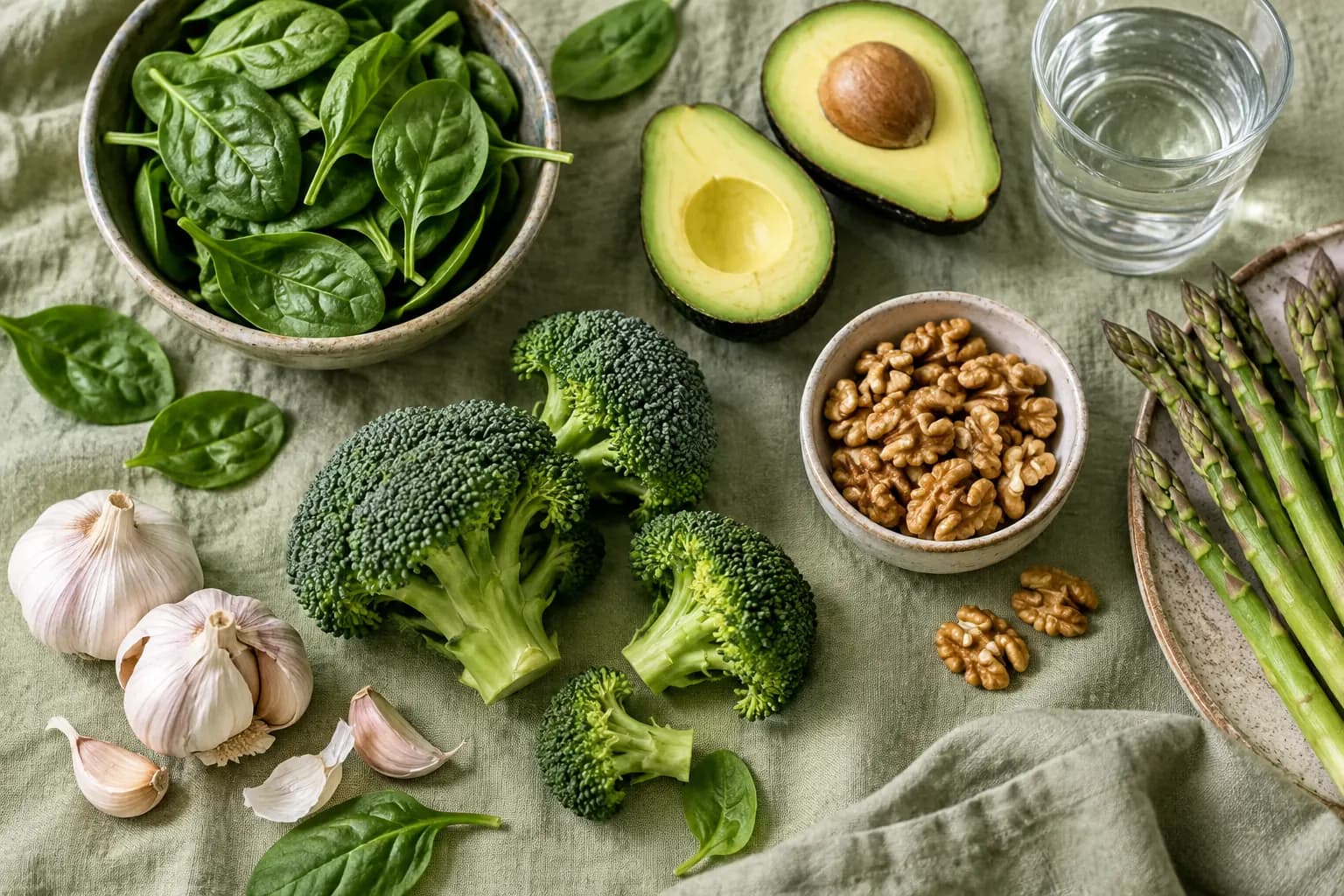
Sulfur-rich vegetables. Broccoli, Brussels sprouts, cabbage, kale, garlic and onions supply sulfur compounds involved in the same chemistry.
NAC (N-acetylcysteine). A supplement that supplies cysteine. Check with a clinician before taking it, especially if you take other medications.
Physical activity and rest. Regular moderate exercise is associated with changes in the body's own antioxidant enzyme systems over time.
Limiting alcohol and smoking. Less alcohol, no smoking and managed stress are good for overall health, whatever their effect on glutathione.
These are general health habits, not ways to target glutathione specifically. If you're considering glutathione itself, the next question is how it's taken.
Glutathione Injections vs. Pills: What's Known
Oral glutathione is partly broken down by digestive enzymes before it reaches the bloodstream, and study results on how much is absorbed are inconsistent.
Glutathione injections deliver the molecule without passing through digestion, which is one reason clinicians may prescribe the injectable form. How much injected glutathione reaches cells, and whether that changes any outcome, is not well established. When prescribed, injections are typically given subcutaneously and can be self-administered at home following instructions from your care team. Scheduling is covered in how often to get glutathione injections. IV drips are another needle-based route, offered elsewhere by in-person clinics and IV lounges, generally at higher cost; see injections vs. IV therapy for the comparison.
Two essential caveats. First, glutathione injections are prescription-only and appropriate only after a licensed clinician reviews your health in an online consultation. They're not for everyone, including during pregnancy and breastfeeding; our side effects and safety guide covers who should avoid them. Second, the roles described in this article are how the body uses its own glutathione. Glutathione injections are not intended to diagnose, treat, cure or prevent any disease, and individual responses vary.
What Does Glutathione Do? Separating Evidence from Hype
Well established: the body makes glutathione; it acts as an antioxidant inside cells, helps regenerate vitamins C and E, and takes part in the liver's normal processing of some compounds. This is textbook biochemistry about the body's own glutathione.
Limited or early: whether taking glutathione meaningfully changes skin appearance, oxidative-stress markers or any other outcome in people. Studies so far are small, short-term and mixed.
Not supported: claims that glutathione cures or prevents disease, "detoxes" or cleanses the body, lightens skin, boosts immunity, reverses aging or replaces medical treatment. Glutathione is not approved for skin lightening, and the FDA has warned consumers about injectable skin-lightening products.
What Does Glutathione Do? Frequently Asked Questions
What does glutathione do for your body every day?
As part of normal physiology, the body's own glutathione helps neutralize free radicals, regenerates spent vitamins C and E, and takes part in the liver's processing of some compounds. It's ongoing cell chemistry.
Can you tell if your glutathione is low?
Not by how you feel. Lower glutathione has no signature symptom, and the vague complaints sometimes linked with it have many common causes, from low iron to thyroid problems. If you feel persistently run-down, see a clinician for a proper work-up rather than self-diagnosing a glutathione deficiency.
Does glutathione change skin color?
Glutathione is not approved for skin lightening, and studies of glutathione and skin appearance are small, short-term and mixed. The FDA has warned consumers about injectable skin-lightening products. Approach cosmetic claims skeptically.
How are glutathione injections different from oral supplements?
Injections deliver glutathione without passing through digestion, while oral glutathione is partly broken down in the gut. How much injected glutathione reaches cells, and whether either form changes any outcome, is not well established.
Does glutathione cleanse your liver?
No. The body's own glutathione takes part in the liver's normal, continuous processing of some compounds, but that is ordinary physiology, not a "cleanse." Glutathione injections are not intended to treat or prevent liver conditions.
What does glutathione do when you drink alcohol?
Processing alcohol produces acetaldehyde and free radicals, and the liver uses glutathione in handling both, which is one reason heavy drinking is linked with lower glutathione. Glutathione does not make drinking safe or prevent hangovers. If you drink heavily, cutting back is the step that matters, and a clinician can help if you want support.
Does NAC do the same thing as glutathione?
NAC (N-acetylcysteine) supplies cysteine, the building block that limits how much glutathione your cells make. Glutathione itself is the finished molecule. They're different products, and whether either is appropriate for you is a question for a licensed clinician.
What Does Glutathione Do? The Bottom Line
Glutathione is an antioxidant your body makes from three amino acids. In normal physiology, it helps neutralize free radicals, regenerates other antioxidants and takes part in the liver's processing of some compounds. That much is textbook biochemistry. What's far less clear is whether taking glutathione, by mouth or by injection, changes any health or cosmetic outcome; studies so far are small, short-term and mixed.
What glutathione is not is a cure, a cleanse or a cosmetic treatment. If you're considering it, the right way is with a licensed clinician: realistic expectations, a review of your health history and medications, and follow-up.
Curious whether glutathione is appropriate for you? Explore clinician-guided glutathione injections or start your online consultation.
Important disclaimer
This article is for general education only and is not medical advice. Glutathione injections are not intended to diagnose, treat, cure or prevent any disease. They require a prescription and provider oversight, and glutathione is not an FDA-approved drug for any disease. Individual responses vary. Always talk with a licensed clinician about your health history and any medications before starting a new treatment.
Disclaimer
Only available if prescribed after an online consultation with a healthcare provider. Plans are offered as a subscription service which can be canceled at any time. Actual product packaging may appear differently than shown. Physicians may prescribe compounded medications as needed to meet patient requirements. The FDA does not review or approve any compounded medications for safety or effectiveness. The statements on this page have not been evaluated by the FDA. Results may vary. If you notice any side effects while using this treatment, contact your healthcare provider immediately.
Keep reading
All articles Anti-aging
NAD+ Nasal Spray Side Effects and Safety: What to Know
Side effects reported with NAD+ nasal spray are often mild, but safety still matters. Here's what to know about effects, cautions, and interactions.Read article Anti-aging
How to Use NAD+ Nasal Spray: Dosing, Frequency & Tips
Using NAD+ nasal spray as prescribed comes down to following your label and using good technique. Here's a practical how-to.Read article Anti-aging
NAD+ Nasal Spray vs. Injection: How to Choose
Nasal spray and injections are two ways NAD+ is prescribed, and they differ in comfort, convenience, and dosing. Here's how to decide which route fits you.Read article