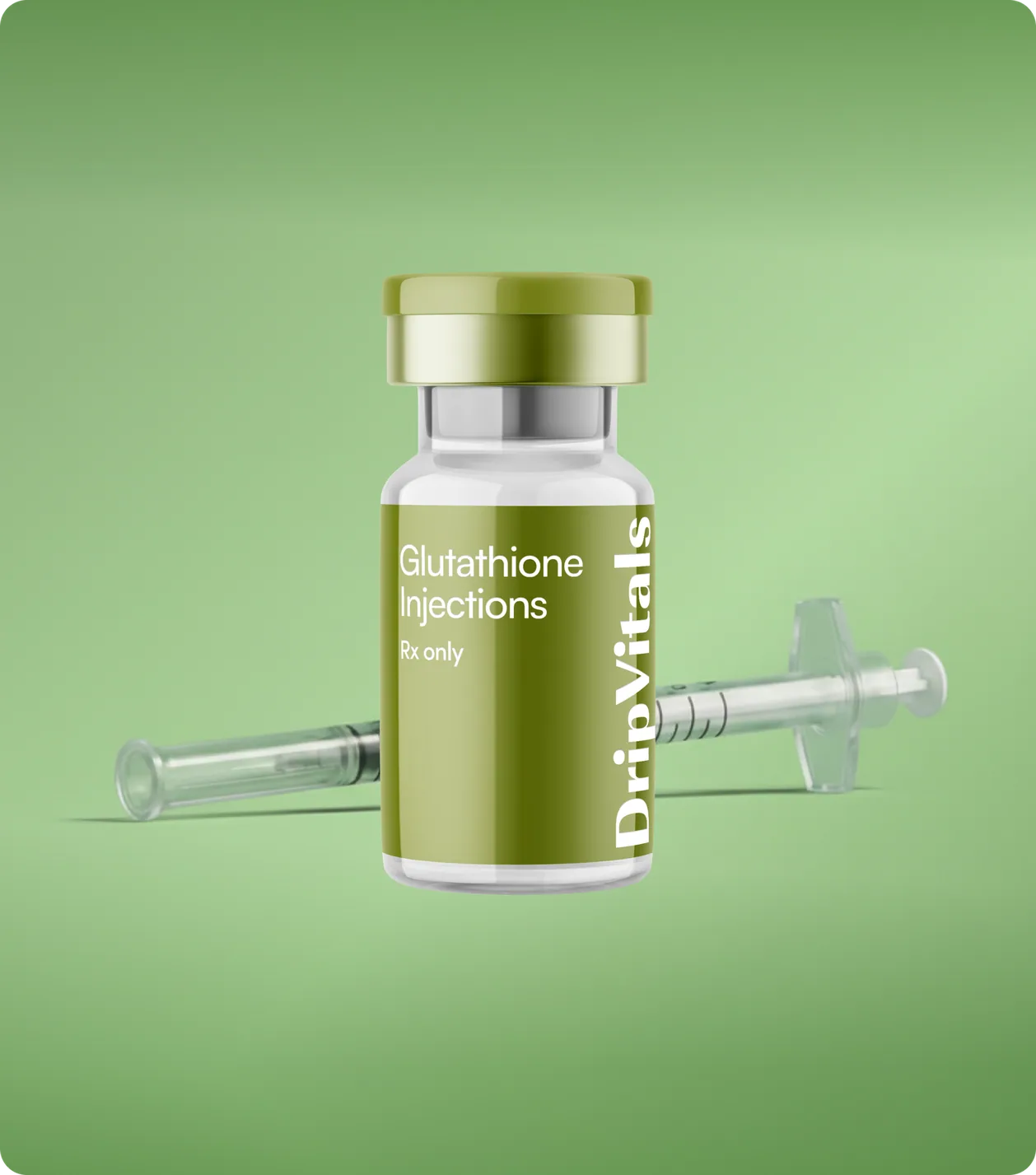
If you're comparing delivery methods, the choice usually comes down to glutathione injections versus IV therapy. Both avoid the absorption problems of oral supplements, but they suit different people. Here's a practical comparison.
The two delivery routes
Subcutaneous glutathione injections deliver a smaller volume into the fatty tissue just under the skin, typically self-administered at home after your provider reviews technique. IV (intravenous) glutathione delivers a larger volume directly into a vein, performed by a clinician in an office or drip bar.
Convenience and time
Injections take a minute or two and fit into a normal routine — no appointment required once you're set up. IV sessions require travel to a clinic and can take 20–60 minutes per visit. For busy schedules, the at-home injection route is often the deciding factor.
Cost
Injectable programs are generally more affordable per dose than in-clinic IV drips, which bundle facility and staff time. If you want ongoing, consistent use, the injection route usually has a lower total cost of ownership.
Absorption and dosing
IV delivers glutathione straight into the bloodstream for immediate availability, while subcutaneous injections release it more gradually. Neither is universally "better" — what matters is a dosing plan your provider tailors to your goals. Frequency is individual, which we cover in how often you should get glutathione injections.
Safety considerations
Both routes require a prescription and clinician oversight. IV carries the usual venous-access considerations (vein irritation, bruising), while injections carry injection-site considerations. Review the full picture in our guide to glutathione injection side effects.
Which is right for you?
Choose injections if you value convenience, at-home flexibility, and lower ongoing cost. Consider IV if you prefer clinician-administered sessions and larger single doses, and don't mind the time and expense. Many people start with injections for simplicity. Your provider can help match the route to your goals — and revisit the potential benefits of glutathione injections as part of the decision.
Important disclaimer
This article is for general education only and is not medical advice. Glutathione injections require a prescription and provider oversight, and glutathione is not an FDA-approved drug to diagnose, treat, cure, or prevent any disease. Individual results vary. Always talk with a licensed clinician about your health history and any medications before starting a new treatment.