
Weight loss8 min read
What to Eat on Semaglutide: Best & Worst Foods
Semaglutide shrinks your appetite — which makes food quality matter more. Here's a practical guide to eating well on GLP-1 therapy.

Medically reviewed by
Dr. Emmanuel Noel Cruz Tancinco, MD
Key takeaways
- With a smaller appetite, every meal counts — prioritize protein first.
- Greasy, fried, and very sugary foods are the most common nausea triggers.
- Small, slow meals and steady hydration prevent most digestive complaints.
- Protect muscle with adequate protein and strength training while losing.
Article
Semaglutide works largely by shrinking your appetite — which means the food you do eat matters more, not less. Eating well on a GLP-1 both improves results and prevents most of the common side effects. Here's a practical guide.
The core principle: protein first
When you're eating less overall, protein protects your muscle while the scale drops. Aim to build each meal around a protein source — eggs, poultry, fish, lean beef, Greek yogurt, cottage cheese, tofu, legumes — and eat it first, before sides. Many clinicians suggest roughly 0.5–0.7 g of protein per pound of goal body weight per day; your provider can personalize this.
Foods that tend to work well
Lean proteins; vegetables and fruit for fiber and micronutrients; slow-digesting carbs like oats, beans, and whole grains in modest portions; and plenty of water. Fiber keeps digestion moving — helpful because slowed gastric emptying can otherwise mean constipation.
Foods that commonly cause trouble
Because semaglutide slows stomach emptying, heavy foods sit longer. The most common nausea triggers are greasy and fried foods, very rich or creamy dishes, large portions of red meat, very sugary desserts and drinks, and carbonated beverages. Alcohol often hits harder and adds empty calories — many people naturally cut back.
How to eat, not just what
Smaller portions, eaten slowly, stopping at the first sign of fullness — overeating on a slowed stomach is the classic cause of nausea and reflux. Don't lie down right after meals, and spread fluids through the day rather than chugging with food.
Don't under-eat
Some people's appetite drops so much they eat too little protein and nutrients. That costs muscle and energy. If you're struggling to eat enough, tell your provider — dose pacing and meal strategies can help. Use our TDEE calculator to sanity-check your intake against your actual energy needs.
A sample day
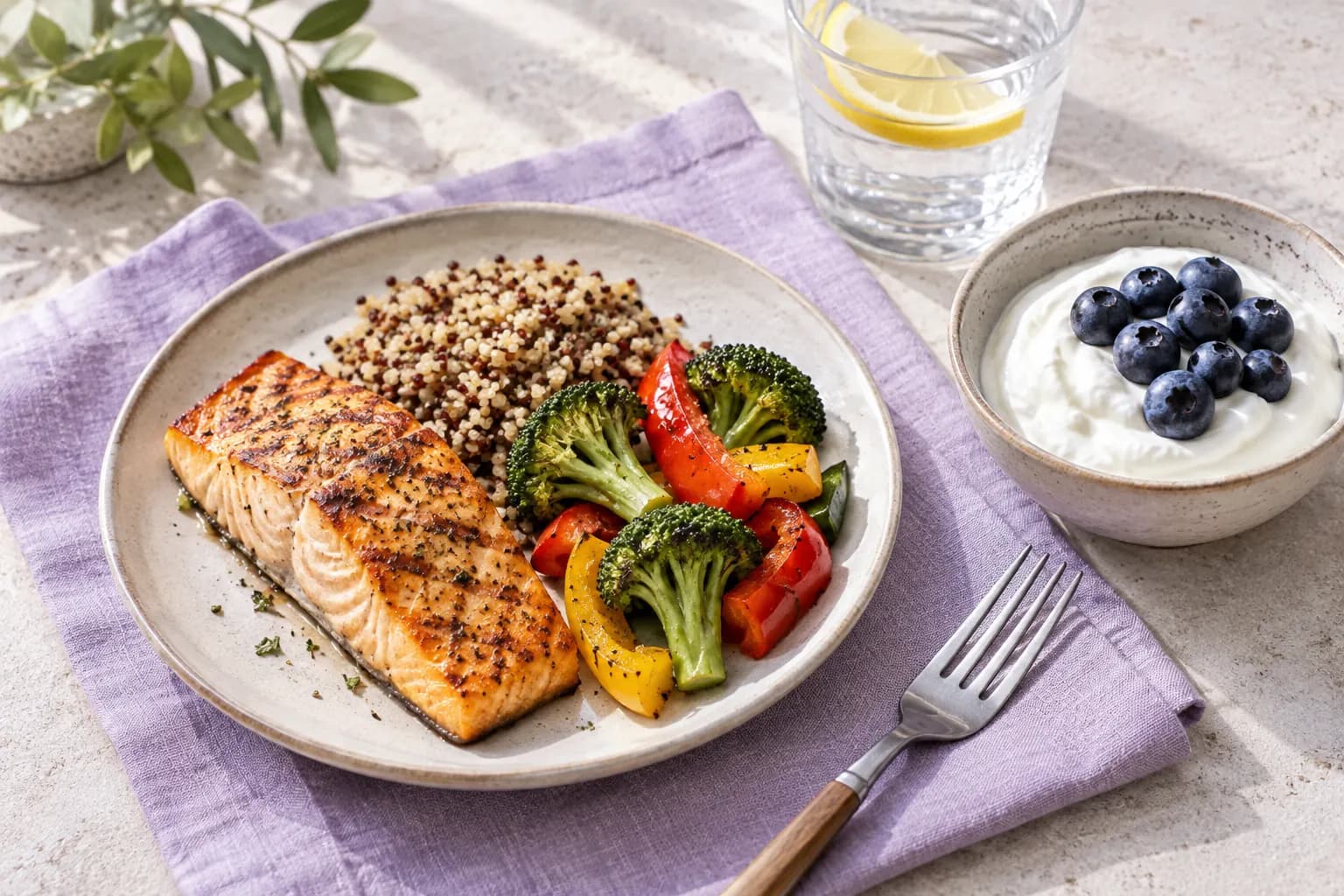
Breakfast: Greek yogurt with berries and a spoon of granola. Lunch: grilled chicken salad with olive-oil dressing. Snack: cottage cheese or a protein shake. Dinner: salmon, roasted vegetables, and a small portion of rice. Adjust portions to your appetite — quality stays the same. The same principles apply on tirzepatide; see our tirzepatide timeline guide for how appetite changes evolve.
Considering semaglutide with clinician support? Explore compounded semaglutide or start your online consultation.
Important disclaimer
This article is for general education only and is not medical advice. Compounded semaglutide and tirzepatide are prescription medications that require provider oversight; compounded medications are not FDA-approved. Individual results vary, and these medications are used alongside diet and exercise. Always talk with a licensed clinician about your health history and medications before starting or changing treatment.
Disclaimer
Only available if prescribed after an online consultation with a healthcare provider. Benefits outlined are based on third-party studies. Plans are offered as a subscription service which can be canceled at any time. Actual product packaging may appear differently than shown. Physicians may prescribe compounded medications as needed to meet patient requirements. The FDA does not review or approve any compounded medications for safety or effectiveness. The statements on this page have not been evaluated by the FDA. Results may vary. If you notice any side effects while using this treatment, contact your healthcare provider immediately.
Keep reading
All articles Weight loss
How to Choose a Legitimate Online GLP-1 Provider
How to tell legitimate online semaglutide and tirzepatide providers from risky ones: the five-pillar checklist, the main types of providers, and red flags.Read article Weight loss
How Long Does It Take for Tirzepatide to Start Working?
Tirzepatide starts working faster than most people think — but on different clocks for appetite, blood sugar, and the scale. Here's what's normal.Read article Weight loss
Hit a Weight Loss Plateau on GLP-1s? Why It Happens & What to Do
Plateaus on semaglutide or tirzepatide are normal — and often fixable. Here's why they happen and the provider-guided ways through.Read article