
Weight loss7 min read
GLP-1 Injection Tips: Semaglutide & Tirzepatide at Home
Weekly GLP-1 injections are quick and nearly painless with good technique. Here's a practical at-home guide from site selection to disposal.

Medically reviewed by
Dr. Emmanuel Noel Cruz Tancinco, MD
Key takeaways
- Semaglutide and tirzepatide are weekly subcutaneous injections — abdomen, thigh, or upper arm.
- Rotate sites every week to keep skin healthy.
- Store as directed (typically refrigerated) and never use cloudy or discolored medication.
- Follow your provider's instructions for missed doses; never double up on your own.
Article
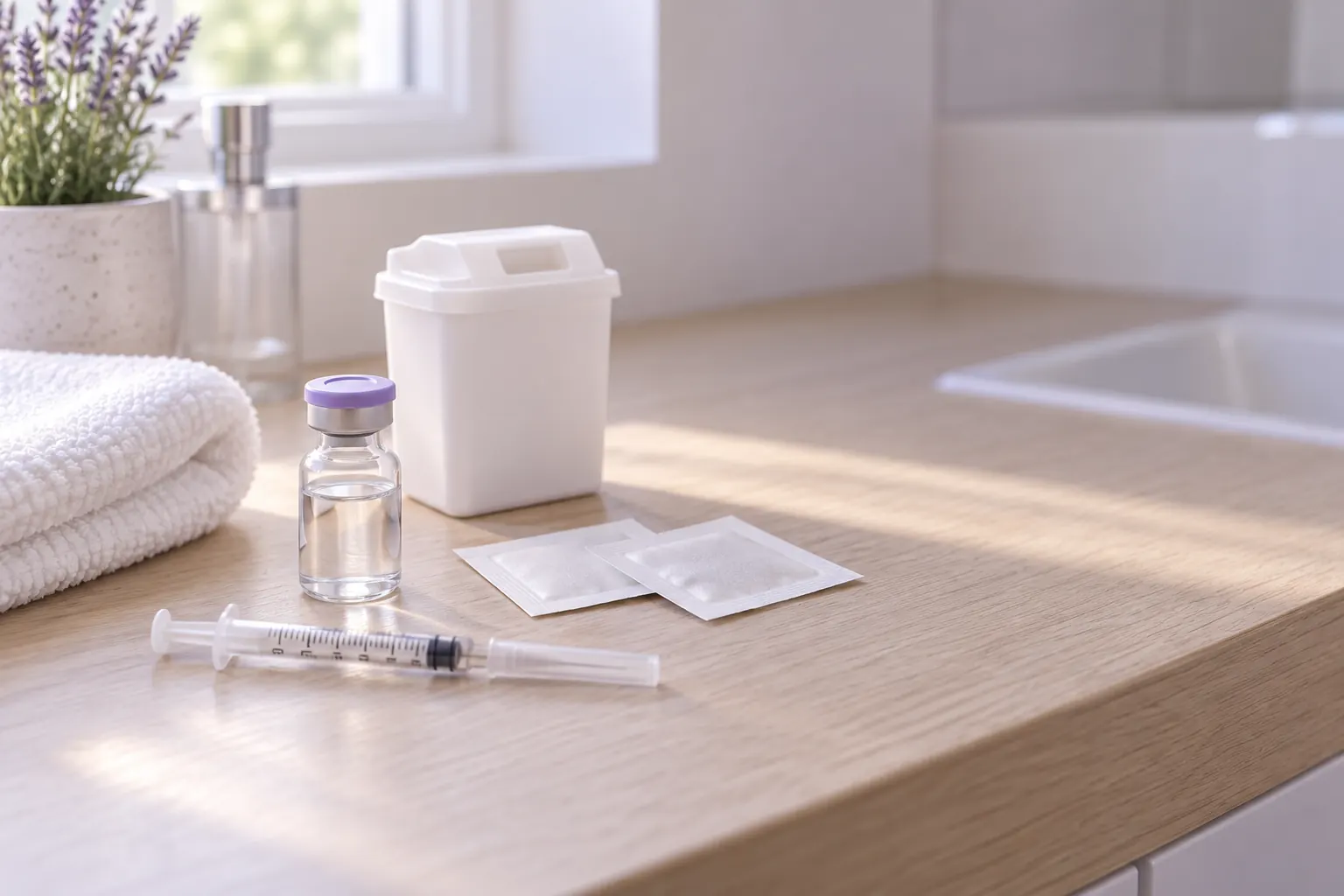
Both compounded semaglutide and compounded tirzepatide are once-weekly subcutaneous injections most people give themselves at home. With good technique, it takes under a minute and is nearly painless. Here's a practical guide — your provider's specific instructions always come first.
Pick your day and keep it
These are weekly medications, so consistency helps both results and side-effect management. Pick a day and anchor it to a routine. If your provider approves shifting your dose day, do it gradually per their guidance.
Choosing an injection site
Subcutaneous means into the fatty layer under the skin — not muscle. The three standard sites are the abdomen (at least two inches from the navel), the front or outer thigh, and the back of the upper arm. All work equally well; comfort and reach usually decide.
Rotate every week
Using the same spot repeatedly can irritate skin. Rotate — abdomen left, abdomen right, thigh left, thigh right — or at least move a couple of inches within a site each week.
Step-by-step
Wash hands. Check the medication — clear, not discolored, in date. Let it lose the fridge chill for a few minutes (cold injections sting more). Clean the site with an alcohol swab and let it dry. Pinch a fold of skin, insert the needle at the angle you were taught (typically 45–90 degrees), inject slowly, withdraw, and release. A cotton ball for a second is fine — don't rub.
Storage and disposal
Store as directed on your label — typically refrigerated, never frozen, and away from light. Used needles go in an FDA-cleared sharps container or a heavy-duty plastic bottle with a screw lid, never loose in the trash. Many pharmacies take sealed sharps containers.
Missed a dose?
Follow your program's instructions — the general principle for weekly GLP-1s is that a dose can often be taken within a few days of the missed day, otherwise skip to the next scheduled dose. Never take two doses close together to "catch up" without provider direction.
Injection-site reactions
Minor redness or a small bump that fades within a day or two is common. Growing redness, warmth, significant pain, or anything that looks infected warrants a call. For what else to expect, see managing semaglutide side effects and the tirzepatide timeline guide.
Your program includes injection guidance and provider support. Explore compounded tirzepatide or start your online consultation.
Important disclaimer
This article is for general education only and is not medical advice. Compounded semaglutide and tirzepatide are prescription medications that require provider oversight; compounded medications are not FDA-approved. Individual results vary, and these medications are used alongside diet and exercise. Always talk with a licensed clinician about your health history and medications before starting or changing treatment.
Disclaimer
Only available if prescribed after an online consultation with a healthcare provider. Plans are offered as a subscription service which can be canceled at any time. Actual product packaging may appear differently than shown. Physicians may prescribe compounded medications as needed to meet patient requirements. The FDA does not review or approve any compounded medications for safety or effectiveness. The statements on this page have not been evaluated by the FDA. Results may vary. If you notice any side effects while using this treatment, contact your healthcare provider immediately.
Keep reading
All articles Weight loss
How to Choose a Legitimate Online GLP-1 Provider
How to tell legitimate online semaglutide and tirzepatide providers from risky ones: the five-pillar checklist, the main types of providers, and red flags.Read article Weight loss
How Long Does It Take for Tirzepatide to Start Working?
Tirzepatide starts working faster than most people think — but on different clocks for appetite, blood sugar, and the scale. Here's what's normal.Read article Weight loss
Hit a Weight Loss Plateau on GLP-1s? Why It Happens & What to Do
Plateaus on semaglutide or tirzepatide are normal — and often fixable. Here's why they happen and the provider-guided ways through.Read article