In stock
Bestseller
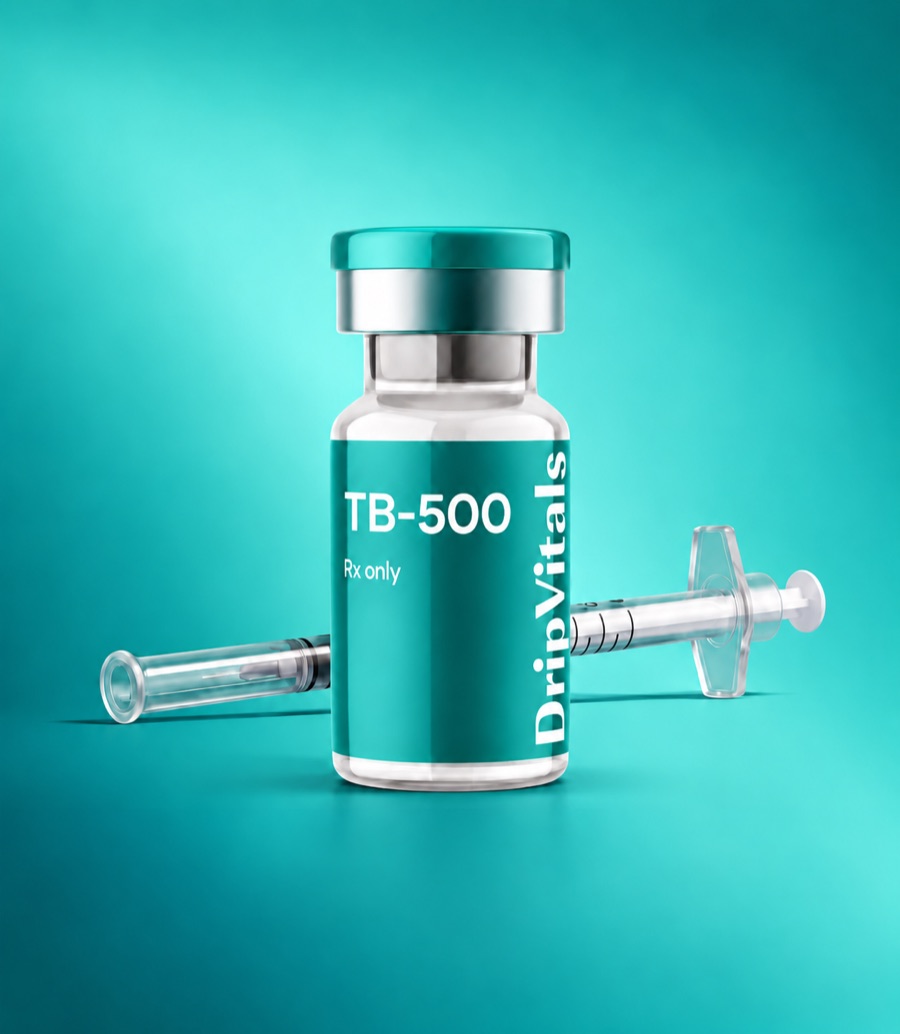
TB-500 Online
TB-500 is a synthetic peptide based on thymosin beta-4, a naturally occurring protein involved in cell migration and wound healing. Explore clinician-guided TB-500 therapy with transparent pricing, online provider review, and licensed pharmacy fulfillment.
TB-500 is based on thymosin beta-4, a protein studied in preclinical wound-healing research.
Home injection kit included with every plan.
Free shipping in discreet packaging.
What is TB-500 and why does it matter?
TB-500 is a lab-made peptide based on thymosin beta-4, a small protein found in nearly all cells that binds actin and plays a role in how cells move — a process central to wound repair. It has been studied preclinically for recovery, and it is not an FDA-approved drug.
What are the potential benefits of TB-500?
Animal studies report improved dermal, corneal, and cardiac repair, and thymosin beta-4 has been tested in early human trials in non-injected forms with preliminary results. No adequately powered human trials support injected TB-500 for muscle or tendon recovery, so expectations should stay realistic.
How is TB-500 different from BPC-157?
TB-500 is based on thymosin beta-4 and is studied in cell-migration and wound-healing models; BPC-157 derives from a gastric protective protein with animal findings in tendon and gut-lining repair. A clinician can discuss whether either fits your situation.
Compounded medications are not FDA-approved. The FDA does not review compounded medications for safety, effectiveness, or quality before they are marketed. A licensed provider determines whether a compounded medication is appropriate based on an individual patient’s medical needs.
Sermorelin is not HGH — it is a peptide that signals the body’s own pituitary gland. Sermorelin is not a substitute for medical care, healthy sleep, nutrition, or exercise, and is not appropriate for everyone (including pregnancy, breastfeeding, or active malignancy — see eligibility below). Treatment is available only after review by a licensed healthcare provider. Individual results vary. Compounded medications are not FDA-approved; FDA does not review compounded medications for safety, effectiveness, or quality before they are marketed.
Provider-reviewed
Licensed pharmacy fulfillment
Free discreet shipping

How Clinician-Guided TB-500 Therapy Works
Recovery underpins strength, mobility, and feeling your best — and it gets harder with age and training load. TB-500 is a peptide based on thymosin beta-4, studied in preclinical research for wound healing and tissue repair. Through DripVitals, a licensed provider reviews your health history and determines whether clinician-guided TB-500 therapy is appropriate for you, with honest expectations about the state of the evidence.
The basics
What Is TB-500?
TB-500 is a lab-made peptide based on thymosin beta-4 (Tβ4), a small protein found in nearly all human and animal cells. When prescribed, it is prepared as a compounded medication and typically administered as a small subcutaneous injection, with dosing set by your clinician.
What TB-500 is
Thymosin beta-4 binds actin — a building block of the cellular skeleton — and plays a role in how cells move, which is central to wound repair, blood-vessel formation, and tissue remodeling. TB-500 replicates the active region of that protein.
How it has been studied
The thymosin beta-4 literature includes extensive animal work — dermal wound-healing, corneal injury, and cardiac-repair models — and, uniquely among recovery peptides, some early-phase human trials in non-injected forms such as eye drops for corneal healing (see references).
TB-500 versus BPC-157
TB-500 and BPC-157 are often discussed together, but they are different molecules: TB-500 works through cell-migration biology, while BPC-157 derives from a gastric protective protein with findings concentrated in tendon and gut-lining repair. A provider can discuss whether either fits your situation.
Why a provider consultation matters
Compounded TB-500 dispensed through this program is not FDA-approved; the FDA does not review compounded drugs for safety, effectiveness, or quality before marketing, and no version of thymosin beta-4 has completed the trials needed for approval. A licensed provider determines whether treatment is appropriate after reviewing your history, medications, and goals. You can start the online consultation here.
Why do people explore TB-500 therapy?

Studied in preclinical models of dermal, corneal, and cardiac repair.

Based on thymosin beta-4, a protein central to cell migration and healing.

Clinician-guided dosing with licensed-pharmacy preparation and support.
Potential benefits are not guaranteed. Evidence for specific outcomes from compounded TB-500 is limited and largely preclinical, and individual results vary. A licensed provider determines whether treatment is appropriate. See clinical references.
How to Start TB-500 Injections Online
Every wellness journey is different, and so are our customized TB-500 treatment plans.
STEP #1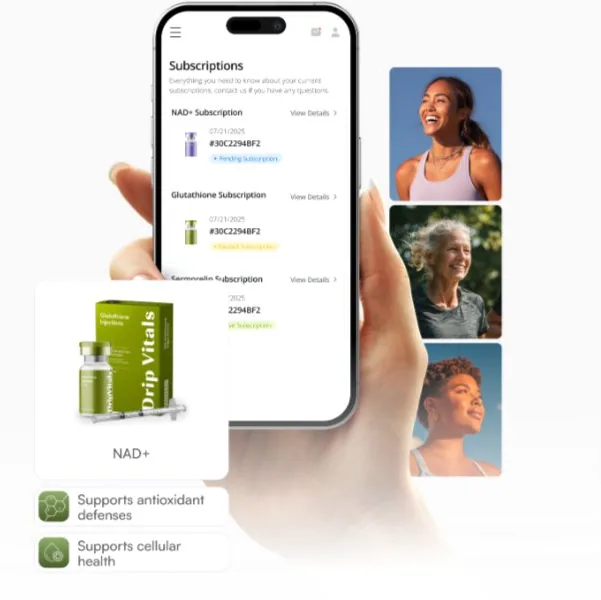
Select your treatment
Choose a plan that fits your needs and complete a medical intake form for review by providers.
STEP #2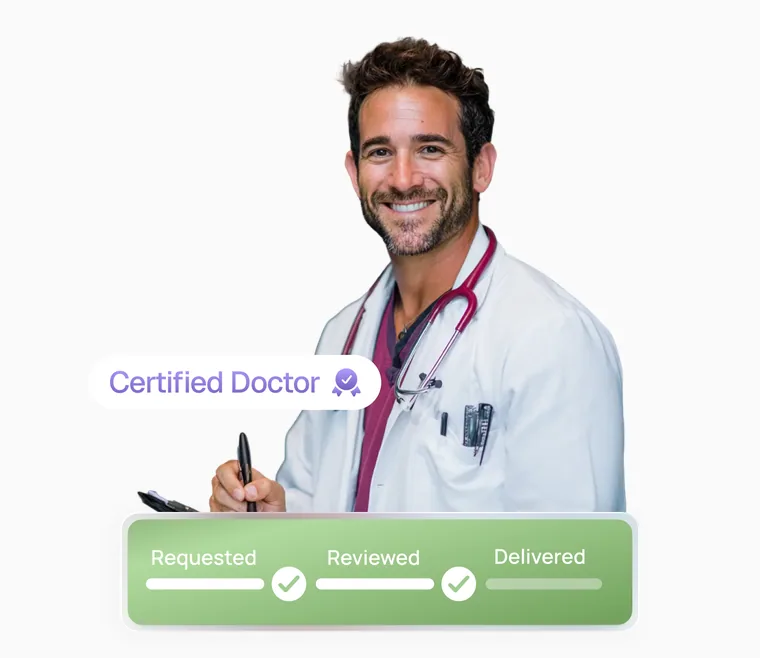
Provider evaluation
A licensed provider reviews your history to determine if TB-500 therapy is right for you — all online.
STEP #3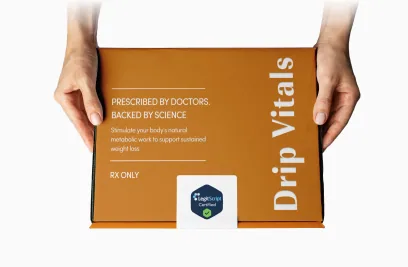
Your medication, delivered
If approved, your TB-500 ships in 3–5 days with discreet packaging, so you can start your journey.

What the research shows about TB-500
Thymosin beta-4 — the protein TB-500 is based on — has an extensive preclinical literature reporting improved wound healing and cell migration, and it has been tested in early-phase human trials in non-injected forms with encouraging but preliminary results (see references). The honest summary: no adequately powered human trials support injected TB-500 for muscle, tendon, or joint recovery. A licensed provider can help you weigh the evidence for your goals and history.
- Based on thymosin beta-4, an actin-binding protein in nearly all cells
- Studied preclinically in dermal, corneal, and cardiac repair models
- Early human trials exist for non-injected thymosin beta-4 forms
- Prescription-only, with clinician-set dosing and follow-up
Safety
TB-500 Safety, Side Effects, and Eligibility
Human safety data for injected TB-500 is limited, and it is not appropriate for everyone. Reviewing the following with a licensed provider is an essential part of treatment.
Potential side effects
Reported effects are generally mild and may include injection-site redness or irritation, occasional headache, or brief lethargy after dosing. Because the long-term profile is not established, report any unusual or persistent symptoms to your care team, and seek prompt medical attention for severe reactions such as difficulty breathing or signs of an allergic reaction.
Who Should Not Use TB-500?
TB-500 is generally avoided during pregnancy or breastfeeding and in people with active cancer or a cancer history, because cell-migration and blood-vessel pathways are the concern. Competitive athletes should not use it: thymosin beta-4 is prohibited by the World Anti-Doping Agency and has featured in doping cases. Your provider reviews your history and will decline treatment when it is not safe or appropriate. Not everyone who applies will qualify.
Drug-interaction review
Share a complete list of your prescriptions, over-the-counter products, vitamins, and supplements during your consultation so your provider can check for potential interactions. Never start, stop, or change a medication without talking to a licensed provider.
When to contact a medical provider, and why results vary
Contact your provider if you experience side effects, have questions about dosing, or notice anything unexpected. Individual results vary, robust human evidence for injected TB-500 is limited, and no specific outcome is guaranteed.
Compounded medications are not FDA-approved. The FDA does not review compounded medications for safety, effectiveness, or quality before they are marketed. A licensed provider determines whether a compounded medication is appropriate for an individual patient.
Comparison
TB-500 vs. BPC-157
A common question is how TB-500 compares with BPC-157, the other widely discussed recovery peptide. Both require a provider’s guidance; the key difference is the biology each is based on.
| Feature | TB-500 | BPC-157 |
|---|---|---|
| Origin | Based on thymosin beta-4, an actin-binding protein | Fragment of a gastric protective protein |
| Research focus | Cell migration, dermal and corneal wound healing | Tendon, ligament, muscle, and gut-lining repair |
| Human evidence | Limited; early-phase trials in non-injected forms | Minimal; no completed controlled trials |
| Administration | Subcutaneous injection | Subcutaneous injection |
| Best option | Depends on medical history and goals | Depends on medical history and goals |
Neither peptide is established as superior — and neither is FDA-approved. The right choice, if any, depends on your medical history, goals, and your provider’s recommendation. Learn more about BPC-157.
Comparison
TB-500 vs. Other Recovery Peptides
TB-500 sits in a family of peptides explored for recovery and wellness. BPC-157 is studied through gut-derived tissue protection, while sermorelin — a growth-hormone-releasing peptide with a longer clinical history — works on the pituitary’s GHRH receptor. Some protocols discuss combining peptides, but any combination decision belongs to a licensed clinician.
Which peptide, or combination, is appropriate depends entirely on your goals, health history, and a licensed provider’s assessment. The compounded peptides offered through this program are not FDA-approved for these uses and are dispensed only by prescription through licensed compounding pharmacies.

Why Choose a Clinician-Guided TB-500 Treatment Plan?
- 1-on-1 guidance from US-based licensed health experts
- Structured dosing and regular check-ins with your care team
- No-cost consultations for continuous treatment optimization
- Fast, discreet delivery with 24/7 messaging support
- Plans designed to stay affordable across commitment lengths
Program
What Is Included in the DripVitals TB-500 Program?
A DripVitals TB-500 program is a clinician-guided subscription that bundles your care and medication. Depending on what your provider prescribes, it typically includes:
- Online medical consultation and licensed-provider review
- Your prescribed TB-500 from a licensed compounding pharmacy
- Home injection supplies, where applicable
- Free, discreet shipping
- Ongoing messaging access to your care team
- Follow-up check-ins with dose adjustments when clinically appropriate
- A subscription you can cancel at any time
TB-500 Injection Cost and Pricing
Pricing depends on the plan you choose and what your provider prescribes. There are no hidden fees, and your dashboard shows exactly what you pay and when.
| Plan | Price | Billing |
|---|---|---|
| Month-to-month | $219/mo | $219 billed monthly |
| 3-Month plan | $199/mo* | $597 billed every 3 months |
| 6-Month plan | $189/mo* | $1,134 billed every 6 months |
*Monthly rates reflect plan length: $199/mo billed $597 every 3 months, $189/mo billed $1,134 every 6 months. Actual price depends on the plan and treatment prescribed. Plans are offered as a subscription that can be canceled at any time.
Choose Your TB-500 Treatment Plan
Select the plan that fits your goals and complete a secure online intake. A licensed provider reviews your health history and prescribes only when appropriate — you are not charged for medication unless prescribed, and you can cancel future renewals anytime.
- Online medical evaluation & licensed-provider review
- Prescribed medication from a licensed U.S. pharmacy, if approved
- Home injection kit & supplies included
- Free, discreet shipping & ongoing clinical support
Compounded medications are not FDA-approved. Treatment requires a prescription and is available only where our clinicians are licensed. See Important Safety Information.
Trust
Medically Reviewed

Medically reviewed by
ABAARM · FAAMM · DABOM
Hormone OptimizationObesity & Metabolic MedicineLongevity-Focused CareFunctional Medicine
Last medically reviewed:
This page was reviewed for medical accuracy. Treatment decisions are made by a licensed provider after reviewing each patient’s medical history.
Education & certifications
- American Board of Anti-Aging and Regenerative Medicine (ABAARM)
- Anti-Aging Metabolic Medicine, American Academy of Anti-Aging Medicine
- American Board of Obesity Medicine (DABOM)
- American Board of Internal Medicine
- The Institute for Functional Medicine
- Bioidentical Hormone Replacement Therapy certified
- Peptide Certification / Member, International Peptide Society
- Integrative Gastroenterology, Endocrinology, Cardiology & Neurology Certification, The George Washington University School of Medicine and Health Sciences
- Member, The American Academy of Anti-Aging Medicine (A4M)
- Member, American College of Physicians
Evidence
Clinical References and Further Reading
These sources discuss thymosin beta-4 and related research. They describe general research — largely preclinical, with some early-phase human work in non-injected forms — and do not establish specific clinical outcomes from this program.
- Goldstein AL, et al. Thymosin β4: actin-sequestering protein moonlights to repair injured tissues. Trends in Molecular Medicine.
- Malinda KM, et al. Thymosin β4 accelerates wound healing. Journal of Investigative Dermatology.
- Sosne G, et al. Thymosin beta 4 promotes corneal wound healing and modulates inflammatory mediators in vivo. Experimental Eye Research.
- Bock-Marquette I, et al. Thymosin β4 activates integrin-linked kinase and promotes cardiac cell migration, survival and cardiac repair. Nature.
- World Anti-Doping Agency — Prohibited List, non-approved substances (S0).
You may also like
TB-500: Frequently Asked Questions
Clear, medically reviewed answers about TB-500 — the research status, safety, administration, and how the online program works.
What is TB-500?
TB-500 is a synthetic peptide based on thymosin beta-4, a naturally occurring protein found in nearly all cells that binds actin and plays a role in cell migration and wound repair. It is not an FDA-approved drug.
What is TB-500 used for?
In wellness settings, clinicians prescribe compounded TB-500 for patients interested in recovery support, based on preclinical research and early-phase human studies of thymosin beta-4 in non-injected forms. It is used under clinician judgment with realistic expectations, not as a proven treatment.
Is TB-500 FDA-approved?
No. Neither TB-500 nor thymosin beta-4 is FDA-approved for any use, and compounded preparations are not FDA-approved products. The FDA does not review compounded drugs for safety, effectiveness, or quality before marketing.
What does the research actually show?
Animal studies report improved dermal, corneal, and cardiac repair, and early human trials of thymosin beta-4 — mostly as eye drops or topical forms — showed encouraging preliminary results. No adequately powered human trials support injected TB-500 for muscle, tendon, or joint recovery.
What are the potential side effects of TB-500?
Reported effects are generally mild — injection-site redness or irritation, occasional headache, or brief lethargy after dosing — but human safety data for injected TB-500 is limited, and the long-term profile is not established. Report anything concerning to your care team.
Who should not use TB-500?
It is generally avoided during pregnancy or breastfeeding and in people with active cancer or a cancer history, and a provider may decline it based on your medications or history. Tested athletes should not use it: thymosin beta-4 is WADA-prohibited and has featured in doping cases.
How is TB-500 administered?
When prescribed, TB-500 is typically self-administered as a small subcutaneous injection, with dose and frequency set by your provider and supplies included in your program. Your care team reviews technique, storage, and disposal with you.
Is TB-500 legal?
The legitimate pathway is a licensed provider's prescription filled by a licensed compounding pharmacy, where available. 'Research use only' peptide sites sell TB-500 with no provider, no licensed pharmacy, and no verified purity — we recommend against using them.
How is TB-500 different from BPC-157?
TB-500 is based on thymosin beta-4 and is studied in cell-migration and wound-healing models, including some early human trials in non-injected forms; BPC-157 derives from a gastric protective protein with animal findings in tendon and gut-lining repair.
What is included in the DripVitals program?
Your plan includes the online medical consultation and provider review, your prescribed medication if approved, injection supplies, free discreet shipping, and ongoing clinical support with dose guidance and follow-ups. You are not charged for medication unless a licensed provider prescribes it.
Is a consultation required?
Yes. Treatment requires a prescription, so a licensed provider must review your health information first — and can decline treatment when it is not appropriate. Not everyone who applies will qualify.
How is pricing determined?
Pricing depends on the plan you choose: $219/month billed monthly, $199/month on the 3-month plan (billed $597), and $189/month on the 6-month plan (billed $1,134). Longer commitments lower the effective monthly price, you see your exact cost before you confirm, and you can cancel future renewals at any time.
Disclaimer
Only available if prescribed after an online consultation with a healthcare provider. Benefits outlined are based on third-party studies. Plans are offered as a subscription service which can be canceled at any time. Actual product packaging may appear differently than shown. Physicians may prescribe compounded medications as needed to meet patient requirements. The FDA does not review or approve any compounded medications for safety or effectiveness. The statements on this page have not been evaluated by the FDA. Results may vary. If you notice any side effects while using this treatment, contact your healthcare provider immediately. TB-500 is not FDA-approved for any use; statements on this page describe areas studied in preclinical and early research, and robust human clinical evidence is limited. TB-500/thymosin beta-4 is prohibited for tested athletes under the World Anti-Doping Agency code.